


Atomization Strategy as a Critical Determinant of Powder Quality in Spray Drying
Summary
Atomization is the critical step that determines particle formation and final powder quality in spray drying. Droplet size, distribution, and velocity influence drying kinetics, residence time, morphology, and functional performance. Pressure nozzles and rotary atomizers offer distinct advantages depending on feed properties and target powder attributes. Effective atomizer selection and scale-up require aligning droplet characteristics with product requirements and maintaining consistent energy input across scales. Optimized atomization ensures predictable quality, improved yield, and stable operation from lab to industrial production.
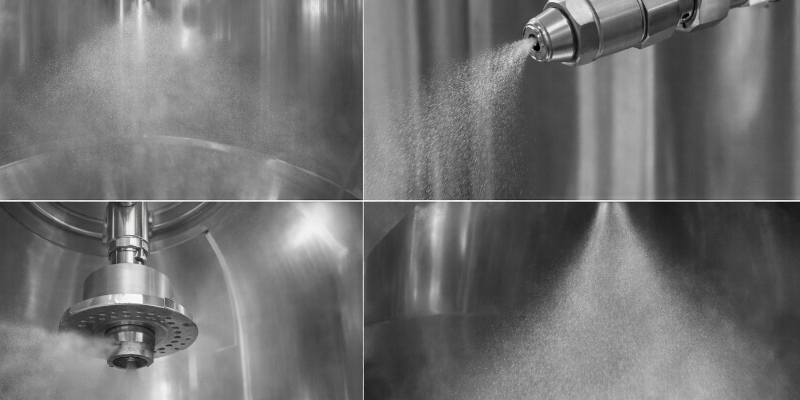
Atomization is the primary step that defines particle formation in spray drying. The size, distribution, and velocity of droplets generated at the atomizer directly determine drying kinetics, residence time, particle morphology, and ultimately the functional performance of the final powder.
Two systems are most commonly used: pressure nozzles and rotary atomizers. Pressure nozzles typically produce narrower droplet size distributions and are suitable for high-solids feeds where uniform particle size and higher bulk density are required. Rotary atomizers generate broader distributions and can handle higher feed rates and viscosities, often producing more porous or hollow particles.
Droplet size influences both heat and mass transfer. Smaller droplets dry rapidly but may lead to fines generation, product losses, or poor flow properties. Larger droplets require longer residence time and may result in incomplete drying, agglomeration, or wall deposition if chamber design is not optimized.
Feed properties strongly interact with atomization behavior. Viscosity, surface tension, and solids content affect droplet breakup mechanisms and spray pattern stability. Non-Newtonian feeds or emulsions may require specific nozzle configurations or operating pressures to achieve consistent atomization.
Atomizer selection must therefore be aligned with target powder attributes such as particle size distribution, density, solubility, dispersibility, and stability. It also influences downstream separation efficiency, cyclone performance, and dust control requirements.
Scaling up atomization is not a simple linear process. Maintaining droplet characteristics across scales often requires preserving energy input per unit mass and geometric similarity of the spray zone.
Optimizing atomization as an integrated part of system design enables reliable production of powders with predictable quality, improved yield, and stable operation across laboratory, pilot, and industrial installations.